
Where to Stay in Paramaribo
Your guide to the best areas and accommodation types
Paramaribo clusters its rooms around the UNESCO-listed historic center and the Suriname River waterfront, where cream and ochre colonial wooden mansions now shelter guesthouses and boutique hotels. Nearly every worthwhile bed sits within a fifteen-minute walk of Independence Square. Paramaribo undercuts comparable Caribbean destinations on price. The mid-range is solid yet small. True luxury hides in one or two riverside resort properties.
Budget
$30-55 per night for guesthouses and simple hotels
Mid-Range
$75-130 per night for 3-4 star hotels
Luxury
$150-225 per night for resort-style properties
Where to Stay in Paramaribo
Hand-picked hotels across price tiers for every visitor.
Our Top Picks
The highest-rated hotel in each price range, selected from all neighborhoods.
Top Pick: Centrum
Budget
Villa Famiri Boutique Hotel
Outdoor swimming pool
Massage room
Private parking
Airport pick-up
Centrum
Check prices on Trip.com →
Top Pick: Centrum
Mid Range
Yogh Hospitality
"Nice hotel"
Outdoor swimming pool
Casino
Gym
Parking
Centrum
Check prices on Trip.com →
Top Pick: Centrum
Luxury
Royal Torarica
"The environment is elegant, the facilities are complete, and the breakfast varie…"
Outdoor swimming pool
Casino
Sauna
Massage room
Centrum
Check prices on Trip.com →
Best Areas to Stay
Each neighborhood has its own character. Find the one that matches your travel style.
Hotel recommendations verified
Centrum
Mid-range
The UNESCO World Heritage inner city of Paramaribo, where cream and ochre wooden colonial mansions line broad avenues converging on Independence Square and Fort Zeelandia. The Saint Peter and Paul Cathedral rises in weathered red brick above it all. The Central Market two blocks south carries the persistent smell of smoked fish and fresh-ground spices.
- ✓ Walking distance to every major landmark in Paramaribo
- ✓ Highest concentration of restaurants and cafes in the city
- ✓ Dutch colonial wooden architecture on every block
- ✓ Well-lit, actively patrolled streets after dark
- ✗ Weekend market traffic makes central streets congested by mid-morning
- ✗ Older colonial buildings run humid in the wet season. Not all rooms have effective air conditioning.
Recommended places to stay in Centrum
Budget
Villa Famiri Boutique Hotel
Outdoor swimming pool
Massage room
Private parking
Airport pick-up
✓ Verified
Check prices on Trip.com →
Mid Range
Yogh Hospitality
"Nice hotel"
Outdoor swimming pool
Casino
Gym
Parking
✓ Verified
Check prices on Trip.com →
Luxury
Royal Torarica
"The environment is elegant, the facilities are complete, and the breakfast varie…"
Outdoor swimming pool
Casino
Sauna
Massage room
✓ Verified
Check prices on Trip.com →
Mid Range
Guesthouse Amice
Private parking
Luggage storage
Library
Bicycle rental
✓ Verified
Check prices on Trip.com →
Mid Range
Holland Lodge Paramaribo
"The room is not big,"
Outdoor swimming pool
Massage room
Public parking
Airport pick-up
✓ Verified
Check prices on Trip.com →
Mid-range to Luxury
Paramaribo's riverside promenade, where palm trees lean over the wide brown Suriname River and fishing pirogues drift past colonial facades at dusk. The strip hums with bar noise and the smoky smell of grilling fish after sunset. Hotel Torarica's lush tropical gardens occupy the finest riverside position in the city.
- ✓ Most scenic location in Paramaribo, directly on the Suriname River
- ✓ Ten-minute walk to the UNESCO historic center
- ✓ Best concentration of bars and restaurants in the city
- ✓ Hotel Torarica's pool and gardens are the finest outdoor amenity in Paramaribo
- ✗ Bar noise carries into street-facing rooms until midnight on weekends
- ✗ Taxis required to reach shopping malls and the commercial district
Recommended places to stay in Waterkant
Budget
Max Garden and Pool
"Suitable for business people on business trips"
Private parking
Currency exchange
Luggage storage
Airport pick-up
✓ Verified
Check prices on Trip.com →
Mid Range
Courtyard Paramaribo
"Great place to stay. Food is good. Breakfast is very nice with local products. O…"
Outdoor swimming pool
Casino
Gym
Private parking
✓ Verified
Check prices on Trip.com →
Mid Range
Greenheart Boutique Hotel
"一個充滿了人情味的特色酒店,酒店的各個角落都很美,前後在這裏住了近兩週,酒店的床品很舒服,遇到的每個人都很nice.同店長店員和其他客人都成為了朋友,得到了他們…"
Hiking
Parking
Car rentals
✓ Verified
Check prices on Trip.com →
Mid Range
Torarica Resort
"The Torarica Resort is a very good hotel. The property is very expansive close…"
Outdoor swimming pool
Beach volleyball
Sauna
Massage room
✓ Verified
Check prices on Trip.com →
Mid Range
Hotel Palacio
"Hotel is in very close in centrum, the staff is very friendly and is helpful. Ro…"
Public parking
Airport pick-up
Luggage storage
Airport drop-off
✓ Verified
Check prices on Trip.com →
Tourtonne
Budget to Mid-range
A mixed residential and commercial neighborhood south of the historic center, with quieter streets, local supermarkets, and the unhurried daily rhythm of working Paramaribo. The clatter of a neighborhood market and the sweet smell of ripe mango from street vendors replace the colonial facades of the UNESCO zone.
- ✓ Quieter nights than the Waterkant bar strip
- ✓ Local restaurants and markets at lower prices than the tourist center
- ✓ Short taxi or minibus ride to the Centrum sights
- ✓ Everyday Surinamese neighborhood character with local bakeries and corner shops
- ✗ No major attractions within walking distance
- ✗ Fewer English-speaking staff at smaller guesthouses
Recommended places to stay in Tourtonne
"沒去過,可惜了,因為飛機飛不過去啊"
Golf course
Private parking
Restaurant
Wi-Fi in public areas
✓ Verified
Check prices on Trip.com →
Mid Range
Ramada by Wyndham Princess Paramaribo
"Breakfast, the restaurant environment is very good, the price is also suitable,…"
Outdoor swimming pool
Casino
Gym
Private parking
✓ Verified
Check prices on Trip.com →
Mid Range
Eco Torarica
"Cost-effective, convenient transportation, very close to the presidential palace…"
Outdoor swimming pool
Private parking
Airport pick-up
Luggage storage
✓ Verified
Check prices on Trip.com →
Mid Range
Royal Breeze Paramaribo
"The hotel is very well located in the city center, not far from the main market.…"
Gym
Parking
Airport pick-up
Luggage storage
✓ Verified
Check prices on Trip.com →
Mid Range
Joah Inn Appartementen
Outdoor swimming pool
Private parking
Airport pick-up
Luggage storage
✓ Verified
Check prices on Trip.com →
Zorg en Hoop
Budget
A practical mixed-use neighborhood anchored by the domestic Zorg en Hoop airstrip, Paramaribo's hub for internal flights to the rainforest interior and coastal communities. Hotels here serve travelers connecting to jungle lodges rather than tourists exploring the capital. The morning roar of propeller engines carries through open windows before dawn.
- ✓ Walking distance to the domestic departure terminal
- ✓ Quieter and less trafficked than the Centrum
- ✓ Lower nightly rates than the riverside zone
- ✓ Good road connection to Johan Adolf Pengel International Airport
- ✗ Thirty-minute taxi ride from the UNESCO historic sights
- ✗ Propeller engine noise during early-morning domestic departure windows
Recommended places to stay in Zorg en Hoop
Budget
Gess Hotel
Casino
Private parking
Luggage storage
Restaurant
✓ Verified
Check prices on Trip.com →
Mid Range
Jacana Amazon Wellness Resort
"環境幽靜舒適宜人,適合家庭去休閑度假"
Outdoor swimming pool
Spa
Massage room
Gym
✓ Verified
Check prices on Trip.com →
Budget
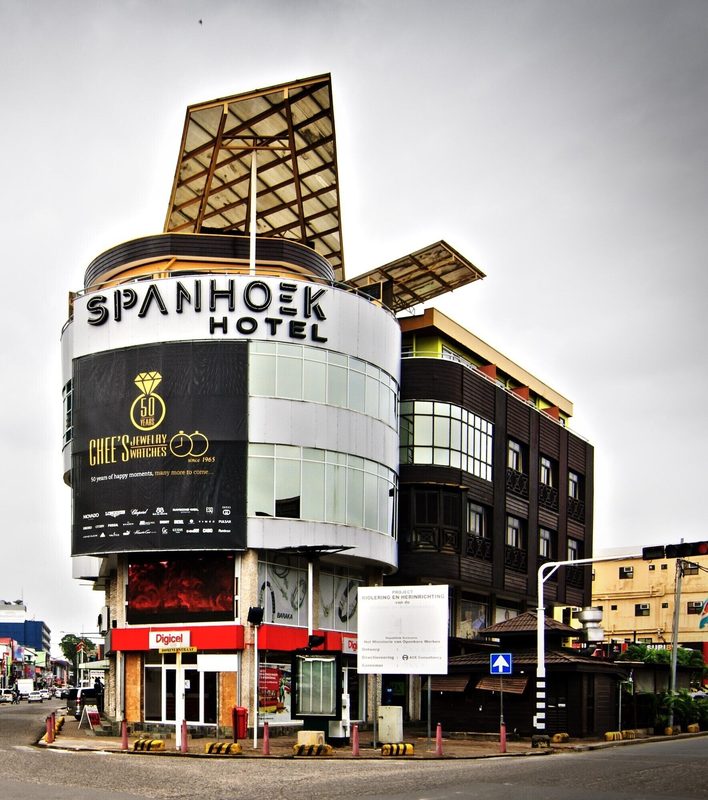
Spanhoek Boutique Hotel
"great hotel for seeing all of suriname"
Gym
Luggage storage
Business center
Multi-function room
✓ Verified
Check prices on Trip.com →
Budget
Waterland Suites
Private parking
Luggage storage
Airport pick-up
Wi-Fi in public areas
✓ Verified
Check prices on Trip.com →
Budget
Radisson Hotel Paramaribo
Outdoor swimming pool
Gym
Luggage storage
Bar
✓ Verified
Check prices on Trip.com →
Flora
Budget
One of Paramaribo's quieter residential neighborhoods, with wide tree-lined streets and private homes behind weathered wooden fences. The air here smells of rain-soaked earth and ripe mango rather than the diesel and charcoal smoke of the center. The sound of toucans and parakeets in the canopy replaces bar noise entirely.
- ✓ Peaceful residential atmosphere far removed from tourist foot traffic
- ✓ Green streets with large shade trees and flowering gardens
- ✓ local neighborhood with everyday Surinamese daily life
- ✓ Guesthouses often provide home-cooked Surinamese meals on request
- ✗ Taxi required for every landmark, restaurant, and shop
- ✗ Almost no restaurant options beyond the guesthouses themselves
Recommended places to stay in Flora
Budget
Hotel Midnight
"Super"
Parking
Luggage storage
Airport pick-up
Wi-Fi in public areas
✓ Verified
Check prices on Trip.com →
Mid Range
Sheva Hotel
Indoor swimming pool
Gym
Private parking
Luggage storage
✓ Verified
Check prices on Trip.com →
Budget
Q-Inn Boutique Hotel
"Breakfast is good, the boss is very good, Suriname is pleasantly surprised, reco…"
Hiking
Public parking
Airport pick-up
Luggage storage
✓ Verified
Check prices on Trip.com →
Budget
Hotel North Resort
Parking
Gym
Luggage storage
Wi-Fi in public areas
✓ Verified
Check prices on Trip.com →
Rainville
Budget
A low-key outer residential district of Paramaribo where budget guesthouses cater to backpackers and expat workers on extended assignments. Streets fall silent after dark. The air carries the smell of cooking fires and tropical rain. The rum shops anchoring each corner serve cold Parbo beer until late.
- ✓ Lowest accommodation prices in Paramaribo
- ✓ Very quiet after dark in an entirely local residential setting
- ✓ Authentic Surinamese food stalls within walking distance
- ✗ Twenty-minute taxi ride to the UNESCO Centrum and the Waterkant
- ✗ Almost no English spoken; Sranantongo and Dutch are the working languages here
- ✗ No tourist infrastructure. Navigation and dining require full self-sufficiency
Recommended places to stay in Rainville
✓ Verified
Check prices on Trip.com →
Find Hotels in Paramaribo
Compare prices and book your perfect stay
Find the best hotel for your stay on Trip.comPrices via Trip.com. We may earn a commission from bookings.
Accommodation Types
From budget-friendly hostels to luxury hotels, here's what's available.
Colonial Guesthouses
$30-60 per night
Converted wooden mansions in the Centrum with high ceilings and verandas. Some rooms have window units, others rely on ceiling fans. Boards creak. Fans whir. Night air drifts through louvers. Charm outweighs sweat. Pack light cotton.
Best for: Travelers who want colonial character and walking access to Paramaribo's UNESCO historic sights. Step outside. Fort Zeelandia waits. Cafes line the street. No taxis needed. History is outside your door.
Email the property directly rather than booking through OTAs. Most owners offer small discounts and flexible check-in for direct reservations. A polite note saves cash. Owners reply fast. They like real guests. Skip the middleman.
Mid-Range Hotels
$75-130 per night
Air-conditioned hotels with pools, on-site restaurants, and reliable Wi-Fi, mostly clustered near the Waterkant and Centrum. Walk to dinner. Swim at noon. Upload photos instantly. The river breeze helps.
Best for: Travelers wanting comfort, a pool, and walkable access to Paramaribo's main attractions without resort pricing. You get beds, breakfast, and a swim. Pay less. Walk everywhere. Simple choice.
Hotel Krasnapolsky and Eco Resort Inn both offer lower nightly rates for stays of four nights or longer. Ask at check-in. Mention the length. The desk smiles. The bill drops. Stay longer, pay less.
Resort Hotels
$150-225 per night
Full-service riverside properties with tropical pools, casinos, and lush gardens; Hotel Torarica is the definitive example. Palms sway. Cards slap. Cocktails arrive fast. The river glows at sunset.
Best for: Honeymooners, leisure travelers, and senior business guests who want the full amenity set under one Paramaribo address. One lobby. Many needs met. No shuttles required. Everything is steps away.
Request the river-view room category specifically; garden-view rooms are pleasant but miss the Suriname River at dusk. The light is gold. Birds skim the water. Garden rooms are fine. River rooms are magic.
Outer Guesthouses
$25-50 per night
Simple family-run rooms in residential neighborhoods like Flora and Rainville, offering basic amenities at the city's lowest nightly rates. Owners greet you by name. Fans spin overhead. Shared kitchens hum. Your wallet relaxes.
Best for: Budget backpackers and long-stay workers comfortable using taxis or minibuses to reach the historic center each day. Mornings start early. Rides cost little. The savings add up. Centrum feels close.
Shared-bathroom rooms are significantly cheaper and typically just as clean. Ask specifically when comparing quoted rates. One hallway. Two toilets. Spotless. Your budget thanks you.
Booking Tips
Insider advice to help you find the best accommodation.
Centrum and Waterkant fill weeks ahead in peak season
Historic center guesthouses and Waterkant hotels in Paramaribo sell out four to six weeks before the July-September and Christmas peaks. Outer neighborhoods like Flora and Rainville almost never fill completely and accept last-minute bookings year-round. Plan early for the center. Relax elsewhere. Flexibility wins.
Direct booking beats OTAs for independent guesthouses
Most colonial guesthouses in Paramaribo operate independently and offer small discounts, added flexibility, or complimentary extras for direct reservations. Email the property first before committing to an OTA rate; a one-day response is typical. Owners enjoy bargaining. A free breakfast appears. Everyone smiles.
Confirm cooling before booking older colonial buildings
Historic wooden guesthouses in the Centrum predate reliable air conditioning. Some rooms have effective window units while others rely on ceiling fans and the natural ventilation of high ceilings. In the rainy-season heat of May and June, clarifying this before arrival is essential. Ask twice. Sleep better.
When to Book
Timing matters for both price and availability.
High Season
Reserve four to six weeks ahead for July through September and the December holiday period, for Centrum and Waterkant properties in Paramaribo. Calendars fill fast. Prices spike. Book early.
Shoulder Season
April, May, and October offer pleasant weather with noticeably lower rates and no need to book far in advance. Rooms sit empty. Staff have time. The city feels relaxed.
Low Season
November through March brings Suriname's rains and deep discounts; walk-in rates are available everywhere in Paramaribo except Christmas week. Umbrellas pop open. Bargains appear. Christmas is the only rush.
Two weeks covers most situations outside peak; Centrum and Waterkant in July and August need six weeks. Outer residential neighborhoods are bookable on short notice year-round. Adjust timing. Save stress.
Good to Know
Local customs and practical information.
Check-in / Check-out
Standard check-in is 14:00 to 15:00; most Paramaribo hotels store luggage for guests arriving on early-morning transatlantic or South American connections. Drop bags. Walk the city. Nap later.
Tipping
Not culturally expected at hotels. Leaving a small amount for housekeeping or rounding up a restaurant bill is appreciated but entirely voluntary. A smile suffices. Coins are extra.
Payment
Major hotels and mid-range properties accept credit cards. Smaller guesthouses in Flora and Rainville strongly prefer Surinamese dollars or US dollars in cash. Carry both. ATMs exist. Cash rules small places.
Safety
Paramaribo is broadly safe for tourists in the Centrum and Waterkant, both well-patrolled in the evenings. Exercise standard urban caution in outer residential neighborhoods after midnight. Stay alert. Walk in groups. Enjoy the night.
Ready to plan your trip to Paramaribo?
Now that you've got the research covered, here's where to go next.